


Over the past couple weeks, we’ve witnessed the usual rash of earnings calls presented by radio broadcasting’s publicly traded companies. From the biggest players to the smallest, the quarterly results differed but the tone and “directionality” of these calls were pretty much the same.
In short, traditional revenue continues its downward trajectory, while the C-suite continues its full-court press to rake in digital dollars. Not surprisingly, some companies are performing better than others. But all are dedicated in their efforts to flip the script to the digital end of the spreadsheet.
A decade ago, it was a much different story as you’ll read in today’s #TBT JacoBLOG post. While many of the big tech names remain exactly the same, they’ve all become more formidable since this post went live in August of 2016.
And back then, “digital denial” was still a condition, often “in the walls” of radio companies in those pre-pandemic days when AI was merely a concept—not a way of life.
Ah, but we’ve come a long way in the past ten years. Or have we? – FJ
“Every Radio Company Is A Tech Company”
August 2016
During the past decade, many traditional broadcasting companies have been quick to point out they are no longer just about radio – they have been transformed into media companies. After all, radio station brands that have a vision of their future are now producing products, content, and marketing vehicles that go well beyond the legacy tower and transmitter output. They are more than one-dimensional music and spoken word outlets, producing videos, podcasts, streams, and social media posts that prove their expanded abilities to go beyond the old terrestrial boundary lines.
As we’re seeing now in the industry trades, many companies are now in the process of reporting their quarterly results. When you read a bit deeper into the remarks and explanations of their CEOs and COOs, you can’t escape the impact of technology and the implications it’s having on everyday station operations.
That hit home for me over the weekend in a piece by New York Times columnist Jeff Sommer. “When Every Company Is A Tech Company” examined the S&P 500’s biggest firms, sussing out the role that tech has played in their ranking. While Apple, Google, Microsoft, and Amazon typically occupy the top 5 (think about that), Sommer’s point is that every successful company has found a way to master technology, including very old school brands like General Electric and Johnson & Johnson.
The money quote in the article is this:
“These days every company is a tech company, but some have better niches, faster growth, more attractive offerings or more favorable share prices than others. These kinds of fundamental distinctions will influence the Top 10 ranks of the future.”
And so it is with broadcasting companies. When I hear executives or even middle managers lament, “We’ve been slow to embrace digital,” it’s an admission they’re behind the curve largely because they failed to embrace technology.
Platforms like iHeartRadio and NextRadio have dominated the trade press for the past many years, underscoring how radio companies have expanded their horizons. But over time, the less publicized story is how some of the most competitive radio companies are increasing professional staffing on the digital and technology side of the street, building and bolstering the systems that allow station brands to grow and expand into new verticals, ultimately creating new revenue streams.
From programmatic buying to automation software to the ratings themselves, it is technology that is now powering the broadcasting industry. In a business that was once defined by paper and pencil ratings diaries, cart machines, and request lines, most radio companies have made great investments in technology in just the past decade.
And allegiances, alliances, and partnerships with outside companies – think podcasting, mobile, and social – will continue to define the ways in which broadcasters are able to grow, as well as become the most successful and profitable companies in the industry.
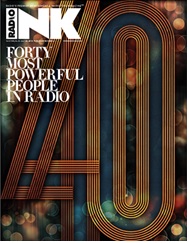 It is interesting that Radio Ink’s “40 Most Powerful” list is now making the rounds, creating the arbitrary hierarchy that drives the conversation and gossip CEOs share over cocktails at The Radio Show. Not to take anything away from this group of radio over-achievers, but perhaps a more telling list would be to rank companies based on their achievements in technology rather than on the number of stations they own. The list might look a little different.
In the early years of our Techsurveys, there were critics who questioned the need for these research studies to understand the audience’s relationship with digital media and technology. The thinking was that radio has survived challenges from “the next big thing” of past years, and will find a way to survive in the Digital Age. But radio’s ultimate future is dependent on the companies that understand and embrace technology, and find ways to make it a part of their fabric of success.
It is also noteworthy that this January will be our 9th consecutive year as Consumer Electronic Show attendees. Believe me when I tell you that it’s an expensive commitment, in terms of time, money, and energy. I often hear broadcasters remark, “I have to get there one of these days,” and yet the radio industry is woefully under-represented at CES.
 Now known as the Consumer Technology Association, its CEO – Gary Shapiro – told me at a Jacobs Media Summit a few years ago the organization’s original name was the Radio Manufacturers Association way back in 1924. The evolution to CTA is a journey that’s taken more than 90 years, and it’s an example to the radio industry that innovation, technology, and the willingness to adapt will tell the tale of today’s companies as they either avoid or embrace the future.
The rankings of the biggest companies in the S&P 500 should be a message to everyone in radio that Apple, Google, Facebook, and other tech companies aren’t just permeating their way into laptops, smartphones, and dashboards. They are becoming the oxygen of the business and financial world, impacting every company in the rankings, whether they’re on the way up – or on the way down.
And so it is with the brands that we used to know as just radio companies. Their ability to navigate the waters that run through the worlds of content, marketing, and community will be greatly dependent on their foresight and ability to master the technology that is all around us.
The tech revolution we’re witnessing now isn’t a phase, a blip, or a cycle. Our Techsurveys, the launch of jācapps, the creation of DASH, and even this blog are all evidence of our company’s desire to embrace and master technology. There’s not a day that goes by when I’m not thankful that we’ve done all these things, despite the expense, the sacrifice, and the risk.
And so it is with the companies we represent and serve. The goal is to not end up like Blockbuster or Borders – formerly media and entertainment giants that failed to see the code on the wall.
The common refrain in radio is that the medium has survived numerous challenges over the last many decades. While that’s the truth, radio won’t pass this next test without embracing technology.
Every company is a tech company. The faster we acknowledge that, the better.

President & Founder at Jacobs Media
Jacobs Media has consistently walked the walk in the digital space, providing insights and guidance through its well-read national Techsurveys.
In 2008, jacapps was launched – a mobile apps company that has designed and built more than 1,300 apps for both the Apple and Android platforms. In 2013, the DASH Conference was created – a mashup of radio and automotive, designed to foster better understanding of the “connected car” and its impact.
Along with providing the creative and intellectual direction for the company, Fred consults many of Jacobs Media’s commercial and public radio clients, in addition to media brands looking to thrive in the rapidly changing tech environment.
Fred was inducted into the Radio Hall of Fame in 2018.
