


At a time in broadcast radio’s recent history where asking whether there’s a marketing budget is either a stupid or a laughable question, stations are compelled to get creative when it comes to spreading the word. In radio terms, this amounts to “building cume.”
Back in the day, station programmers and promotion directors had the entire population to work with because virtually everybody listened to the radio. Today, that pond of potential listeners to the over the air product has diminished, depending on the type of audience a station is hoping to attract. Those who wouldn’t dream of listening to an AM or FM station – or don’t know where to find one – would seemingly be out of consideration.
But if a good friend whose taste you trust told you about a podcast that you, in particular, would absolutely love, you might give it a shot – even if you rarely or never listen to podcasts. That’s how powerful a positive recommendation from another person you respect can be.
In a world where AI can do just about anything, it cannot replicate the stamp of approval from a friend. And it certainly can’t touch when hundreds or even thousands show up to express their fandom at an event that’s meaningful to them.
That’s how Simon Hernandez-Arthur describes the power of fan recommendation in a recent Axios article, “Fans are the new communicators.”
However, this isn’t a strategy for everybody. In fact, a minority of radio stations in 2026 could possibly make this work because they’ve got the fan base – most obviously the key component.
This is why every Jacobs Media Techsurvey conducted since 2005 has included the all-important Net Promoter question. It is a direct measurement of a station’s fan quotient. And believe me, we’ve seen the results across thousands of radio brands.
It is a simple but effective measure of fans’ propensity to recommend your station or show. The scores can be very telling.
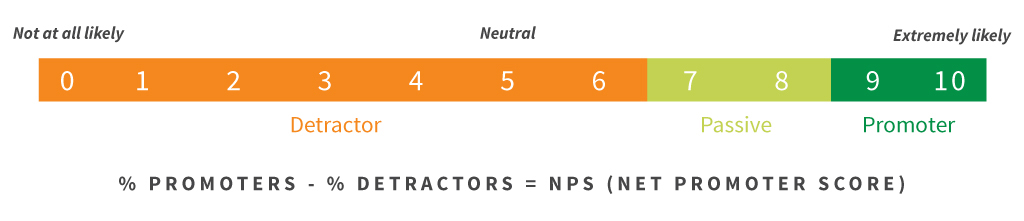
And they vary – greatly. That why when you study Net Promoter scores by format or even platform (ex: public vs. commercial), they only provide a surface indicator of core fan love – the degree to which audience members will gladly sing your praises.
So, the first order of the day is determining whether your station (or show) even qualifies. The next important step is understanding what resonates with those mega-core listeners.
Done right, communications strategist Shawn Smith tells Axios this strategy can work across constituencies:
- Fans can help grow your reputation and image via social platforms, reinforcing one another
- Members of the media see this activity and cover these stories
- Station staffers feel pride when they see fans amplify a station’s core benefits and assets
- Investors see a brand worth supporting

For radio, I would add these other important subgroups:
- New cumers or “lapsed listeners” who otherwise aren’t tuning in but could be with a “push”
- People who are lonely (and there is a growing number of these) who are looking for a local group with whom they can identify
- Current fans who desire a deeper, rich experience with your brand
Depending on the type of station or show you are, different experiences will have varying degrees of resonance. The Axios story cites a promotion with Olivia Rodrigo as an effective brand experience for Etsy.

As their VP of brand marketing, Daniel “Monty” Montalto (pictured), explained, “We’re not trying to manufacture culture. We’re giving fans new, personal ways to participate in communities and cultural moments they already care about.”
Those words should echo in the headsets of the programmers at music stations where “backstage” opportunities can happen across music formats.
Another example mentioned the “Jeep” community of owners who connect with each other via their familiar (to them) “wave,” as well as the activity of “ducking” – placing little duck figurines on one’s own Jeep, and then repeating the placement on a stranger’s vehicle. (You can read how Jeep is capitalizing on the trend here.)


A number of years ago, Paul Jaxon (pictured) who did afternoons at Philly’s WMMR (now with WRFF) organized his own Jeep “meet-ups,” capitalizing on a trend he recognized early on. Years ago, hundreds of Jeep-sters gathered in MMR’s vast Bala Cynwyd parking lot to hang out and commune with one another.
MMR didn’t have to even create an event – it was there for the taking. Again, it’s a matter of knowing your audience and being there.
To the end, this is an area where radio stations have dropped the ball by not totally understanding what moves their fans.
The Axios article recalls how back in the 90’s, Comic-Con executive David Glanzer (pictured) tells the story of a radio host being shocked over a station contest winner turning down Grateful Dead tickets in order to attend his fanfest.

Most of the time, these all-important determinations of “What works?” for a fan base can be learned from a focus group or two, or a handful of one-on-ones, all populated from the station’s email database. After all that’s where your core fans live. They’ll tell you what they want and what makes it special for them.
The final word from Comic-Con’s Glanzer to Axios:
“Share, don’t sell.”

President & Founder at Jacobs Media
Jacobs Media has consistently walked the walk in the digital space, providing insights and guidance through its well-read national Techsurveys.
In 2008, jacapps was launched – a mobile apps company that has designed and built more than 1,300 apps for both the Apple and Android platforms. In 2013, the DASH Conference was created – a mashup of radio and automotive, designed to foster better understanding of the “connected car” and its impact.
Along with providing the creative and intellectual direction for the company, Fred consults many of Jacobs Media’s commercial and public radio clients, in addition to media brands looking to thrive in the rapidly changing tech environment.
Fred was inducted into the Radio Hall of Fame in 2018.
