

Getting an order is the exciting part. Getting it from your store to your customer is where a lot more has to happen. Inventory needs to be available. The order has to reach the right fulfillment location. Someone needs to find the products, pack them correctly, choose a shipping service, create the label, and make sure tracking gets back to the customer.
When order volume is low, those steps can feel pretty straightforward. As an eCommerce business adds products, sales channels, warehouses, suppliers, and shipping carriers, fulfillment becomes a much bigger operation.
eCommerce order fulfillment connects all of those moving pieces. A strong process helps orders move from purchase to delivery without forcing teams to constantly double-check inventory, hunt down order information, or jump between disconnected systems.
What Is eCommerce Order Fulfillment?
eCommerce order fulfillment is the process of getting an online order from the point of purchase to the customer. It includes confirming inventory, deciding where the order should be fulfilled, picking and packing the products, choosing a shipping service, creating the label, sending tracking information, and getting the package into the carrier network.
At a high level, the process looks like this:
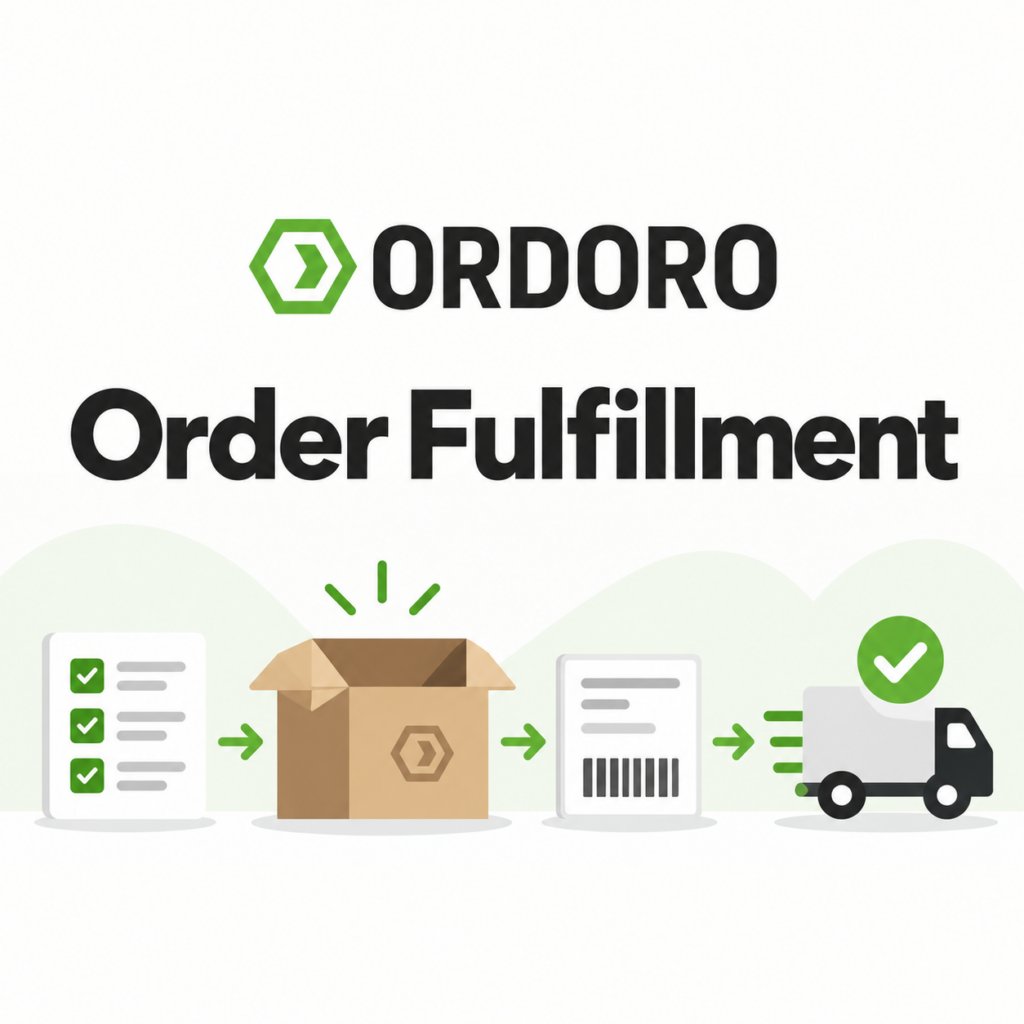
Order received → inventory allocated → fulfillment location selected → products picked → order packed → shipping service selected → label created → tracking sent → delivery
Each step affects the next.
If inventory is inaccurate, the order may be assigned to stock that is not available. When the wrong warehouse is selected, the team may spend extra time rerouting the order. If package information is incorrect, shipping rates may be wrong. And if tracking does not make it back to the sales channel, the customer may be left wondering where the order went.
That is why fulfillment is more than packing boxes. It sits at the intersection of inventory, warehouse operations, order management, and shipping.
How the eCommerce Fulfillment Process Works
The process starts as soon as an order enters the system. Before anyone reaches for a box, the business needs to know whether the products are available and where they should come from. For a small operation with one warehouse, that decision may be easy. For a business using multiple locations, suppliers, 3PLs, or different fulfillment workflows, there may be more to sort out.
Once a fulfillment location is determined, the products can be picked and prepared for shipment. The team confirms the items and quantities, packs the order, enters or verifies package details, and chooses how the shipment should travel.
After the label is created, tracking information needs to follow the order back to the storefront or marketplace. From there, the carrier takes over the physical movement of the package, but the eCommerce business still owns the customer experience until the order arrives.
The smoother those handoffs are, the easier it is to keep orders moving without creating extra work between each step.
Inventory and Fulfillment Location
Fulfillment cannot move very far without accurate inventory. Before an order is allocated, the business needs to know whether the product is available. That sounds simple until inventory is spread across several locations, reserved for different workflows, or shared across multiple sales channels.
This is where eCommerce inventory management becomes part of the fulfillment process. Inventory numbers need to reflect what is really available so teams are not trying to fulfill orders for products they cannot find.
Location matters too. A business may have inventory in its own warehouse, another company location, a 3PL, or with a supplier. Some inventory may even be separated logically for subscription customers, wholesale orders, or another priority workflow.
As we covered in Virtual Warehouses for eCommerce, a warehouse inside an operations system does not always need to represent a separate building. It can also help organize inventory or fulfillment responsibilities around the way the business works.
Once multiple fulfillment sources enter the picture, knowing that an item is “in stock” is no longer enough. The team also needs to know where it is available and which orders should have access to it.
That connection between inventory and location is also why strong warehouse management plays such an important role in fulfillment. The faster a team can trust its inventory and find the products it needs, the less time orders spend waiting.
Picking, Packing, and Preparing the Order
Once an order is ready for fulfillment, the warehouse work begins. Picking is the process of locating the products needed for an order. Packing is the process of confirming those items, choosing the appropriate packaging, and preparing the shipment for the carrier.
As order volume grows, small inefficiencies here become much more noticeable. Walking back and forth across a warehouse, checking the same order several times, or correcting packing mistakes may not feel significant when there are ten orders on the board. At hundreds or thousands of orders, those extra steps add up quickly.
Accuracy matters just as much as speed. The wrong product, quantity, or variation can turn a completed shipment into a return, replacement, support ticket, and disappointed customer. Clear picking and packing workflows help teams move faster without treating accuracy as the tradeoff.
Barcode scanning, packing lists, order verification, warehouse organization, and batch workflows can all support that process. We will look more closely at picking and packing later in this series because it deserves its own discussion.
Choosing a Shipping Service
Once the order is packed, the next question is how it should ship. Cost matters, but it is rarely the only factor. Delivery speed, carrier, service level, destination, package size, package weight, and the customer’s expectations can all influence the choice.
That is where shipping rate shopping comes into the fulfillment workflow.
Comparing available rates gives the shipper a chance to see the tradeoffs before buying a label. One carrier may be cheaper while another offers a significantly earlier delivery. A priority order may justify a different service than a standard shipment.
The Ship From location can affect those choices too. An order leaving one warehouse may have different costs and estimated delivery times than the same package leaving another. The point is not to turn every label into a complicated decision. It is to have enough information available when the decision needs to be made.
For a quick look at how shipping costs can vary by package and destination, Ordoro also offers a shipping rate calculator.
Tracking and Delivery
Creating the label is not the end of the fulfillment process. Once the package enters the carrier network, tracking information becomes the customer’s connection to the order.
That information should make its way back to the sales channel so customers can follow the shipment without contacting the business for an update. For merchants selling across multiple storefronts or marketplaces, keeping those updates connected can become increasingly important.
The fulfillment workflow therefore has two sides.
The physical side gets the package out the door.
The information side keeps inventory, order status, shipment details, and tracking synchronized as the order moves. A breakdown on either side creates friction. A package can ship successfully while the order still looks unfulfilled online. Inventory can be deducted in one system but not another. Tracking can exist without ever reaching the customer.
Connected systems help reduce those gaps.
In-House Fulfillment, 3PLs, and Dropshipping
Not every eCommerce business fulfills orders the same way. Some businesses handle the entire process in-house. They own the inventory, operate the warehouse, pick and pack orders, and purchase the shipping labels themselves. Others work with a third-party logistics provider, or 3PL, that stores inventory and handles some or all of the physical fulfillment process. Dropshipping takes another approach. The merchant receives the order, but a supplier stores and ships the product directly to the customer. Some businesses use a combination of all three.
A company might fulfill its core products internally, send oversized items through a supplier, and use a 3PL to support another region. That is where fulfillment starts becoming less about choosing one model and more about coordinating several.
The underlying questions stay the same: Where is the inventory? Who is responsible for fulfilling the order? How does the order reach them? And how does shipment information make its way back?
We will explore these fulfillment models in more detail later in this series.
Common eCommerce Fulfillment Problems
Most fulfillment problems are not caused by one dramatic failure. They usually come from small disconnects between systems or steps.
Common trouble spots include:
- Inventory showing as available when it is not
- Orders being routed to the wrong fulfillment location
- Products being difficult to find during picking
- Packing errors or incorrect quantities
- Choosing shipping services without comparing cost and delivery time
- Tracking information failing to return to the sales channel
- Teams manually moving information between storefronts, warehouses, and carriers
- Different fulfillment workflows being managed in completely separate systems
Stock availability is a particularly important one. A business may have plenty of demand and still lose sales if inventory planning and fulfillment are not connected. Our guide to preventing eCommerce stockouts covers that side of the equation in more detail.
The goal is not to eliminate every exception. eCommerce will always have unusual orders, carrier issues, inventory adjustments, and customer requests. The goal is to make the normal order flow predictable enough that the team can spend its time on the exceptions instead of treating every order like one.
When Fulfillment Outgrows Disconnected Systems
Manual processes can work for a while. Then more orders, channels, and fulfillment steps start exposing the cracks.
The warning signs usually appear gradually. The team starts copying information between systems. Inventory has to be checked in several places before someone trusts it. Orders from different channels follow different processes. Shipping requires extra tabs or logins. Someone has become the person who simply knows how everything is supposed to work.
That creates a fulfillment process that depends more on people remembering steps than on the workflow itself. Connected eCommerce operations help reduce those handoffs.
Orders can come together in one place. Inventory information can support fulfillment decisions. Warehouse locations can help determine where orders belong. Shipping rates can be compared during the label workflow, and tracking information can flow back after the shipment is created.
If you are comparing platforms for that kind of workflow, our Ordoro vs. ShipStation comparison looks at how the two platforms approach shipping alongside inventory, purchasing, warehouses, kitting, dropshipping, and fulfillment.
How Ordoro Connects eCommerce Fulfillment
Ordoro brings order management, inventory, warehouse workflows, and shipping together so eCommerce teams can manage more of the fulfillment process from one system.
Orders from connected sales channels can flow into the same operational workspace. Inventory and warehouse information can help teams understand what is available and where orders should be fulfilled. Once products are ready to ship, teams can compare rates, create labels, process orders in batches, and send shipment information back to the appropriate sales channel.
That connected workflow becomes increasingly useful as businesses add volume and complexity. A merchant may start with one storefront, one warehouse, and one carrier. Over time, that same business may add marketplaces, another fulfillment location, suppliers, kits, subscription customers, or multiple carrier accounts.
The individual tasks are not necessarily new. There are simply more of them, happening in more places. Bringing those operations together can make it easier to keep the fulfillment process moving without losing visibility along the way.
You can learn more about Ordoro’s Shipping and Order Management tools or explore its Inventory Management capabilities.
Frequently Asked Questions About eCommerce Order Fulfillment
What does eCommerce order fulfillment mean?
eCommerce order fulfillment is the process of getting an online order from purchase to delivery. It typically includes inventory allocation, selecting a fulfillment location, picking, packing, shipping service selection, label creation, tracking, and delivery.
What are the main steps in the eCommerce fulfillment process?
The main steps are receiving the order, confirming and allocating inventory, selecting the fulfillment location, picking and packing the products, choosing a shipping service, creating the label, sending tracking information, and delivering the shipment.
What is the difference between order fulfillment and shipping?
Shipping is one part of order fulfillment. Fulfillment includes the work that happens before and around shipping, such as inventory allocation, warehouse selection, picking, packing, and order updates.
Can eCommerce fulfillment be automated?
Parts of the process can be automated. Businesses can use rules, presets, inventory synchronization, order routing, batch processing, and other tools to reduce repetitive work while still allowing teams to review exceptions when needed.
What is the difference between in-house fulfillment and a 3PL?
With in-house fulfillment, the eCommerce business stores inventory and handles the fulfillment process itself. With a 3PL, a third-party logistics provider stores inventory and performs some or all of the physical fulfillment work on the merchant’s behalf.
Is dropshipping considered order fulfillment?
Yes. Dropshipping is a fulfillment model in which the seller receives the customer order but a supplier stores and ships the product. The merchant still needs to coordinate order information, inventory availability, tracking, and the customer experience.
How does inventory management affect fulfillment?
Fulfillment depends on knowing what inventory is available and where it is located. Inaccurate inventory can lead to delayed orders, overselling, stockouts, and orders being assigned to locations that cannot fulfill them.
How does shipping rate shopping fit into fulfillment?
Rate shopping happens after the shipment details are known and before the label is purchased. It allows the business to compare carrier costs, services, and delivery timing before choosing how the order should ship.
Keep the Entire Order Moving
eCommerce fulfillment is not one task. It is a chain of decisions that starts when the customer places the order and continues until the package reaches their door.
Inventory tells you whether you can fulfill it. Warehouse information helps determine where it should come from. Picking and packing turn that inventory into a shipment. Rate shopping helps determine how it should travel. Tracking keeps the customer connected after the package leaves.
When those pieces work together, fulfillment becomes less about chasing orders and more about moving them through a repeatable process. And as an eCommerce business grows, that connected process becomes increasingly important.
Ready to bring orders, inventory, fulfillment, and shipping into one workflow? Start a free trial of Ordoro and see how the pieces can work together.
