

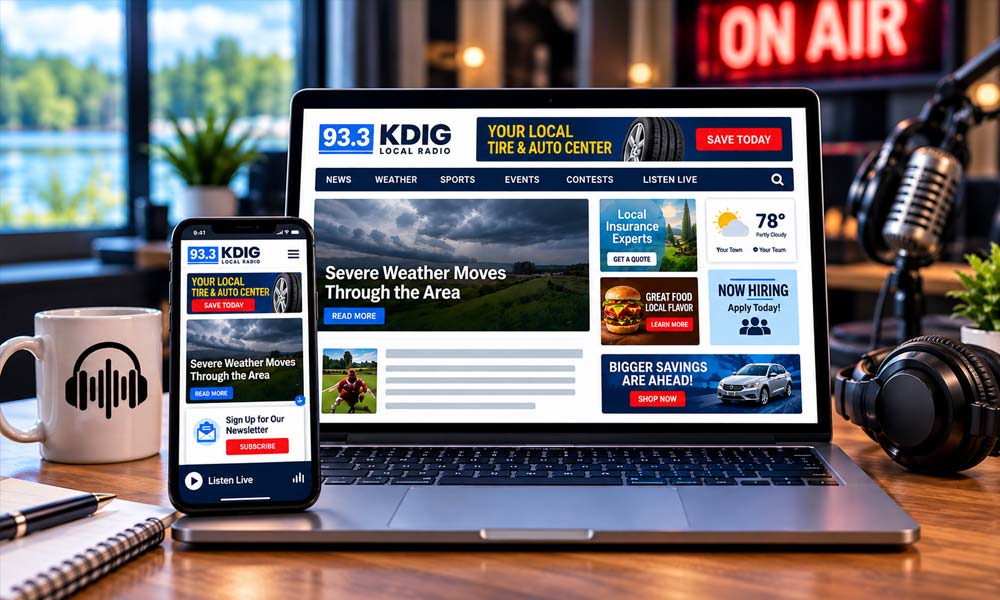
Radio stations have always understood that there is a limit to how many commercials you can put into an hour before they begin affecting the product. Commercials pay the bills, but listeners still expect something worth listening to between those commercials.
We should think about radio station website ads the same way.
I recently came across an article about experimental metrics Google has added to Chrome user-experience data that look at advertising on websites. Among other things, they can measure the number of ads on a page, how much space those ads occupy, how much data they require and how much processing power they use.
That’s an interesting development because website visitors have been making those measurements in their heads for years. They don’t know how many kilobytes an ad downloaded or how much CPU time it consumed. They just know when a website is annoying.
We’ve all experienced it. You click a story and immediately get a popup. You close it, only to find an advertisement stuck to the bottom of the screen. Something else loads and moves the paragraph you were trying to read. A video starts playing. Eventually, whatever brought you to the website isn’t worth the trouble anymore.
Radio stations need to be particularly careful about creating that experience because we’re constantly asking listeners to visit our websites.
Look at Your Website on Your Phone
One of the simplest things you can do is pull up your station website on your phone and actually use it. Don’t just look at the homepage. Read a local story. Check the weather. Find an event. Enter a contest. Start the stream. Do the things you’re asking listeners to do every day.
Then look at how much of the screen belongs to advertising.
A banner that looks perfectly reasonable across a desktop monitor can occupy a significant amount of space on a phone. Add a sticky advertisement, a popup and your streaming player, and suddenly there isn’t much room left for the content. The listener came for that content. The advertising gets an audience because you created something the audience wanted in the first place.
That’s an important relationship to protect.
Don’t Make Listeners Fight Their Way to the Content
There’s nothing inherently wrong with popups, sticky banners or other advertising designed to get attention. Used carefully, they can work very well. The problem starts when several of them compete at the same time.
Think about someone hearing you mention severe weather on the air and going to your website for more information. They shouldn’t have to dismiss a newsletter signup, close an advertisement and navigate around another sticky element before they can find out what’s happening.
We’re using valuable airtime to tell people to visit our websites. We shouldn’t create obstacles once they get there.
Be Careful With Automatic AdSense Placements
AdSense can generate additional revenue, but I’m particularly cautious about automatic ad placements on radio station websites.
An automated advertising system is looking for opportunities to display more advertising. Its priorities aren’t necessarily the same as yours.
Your priority should be getting that listener to come back tomorrow.
There is a point where generating a few additional impressions isn’t worth making your website feel cluttered, slow or generic. Automatic advertising can also end up competing for attention with local businesses that are buying advertising directly from your station.
I’d rather see a station offer fewer, better digital positions and make those positions more valuable to local advertisers.
Scarcity isn’t necessarily a bad thing. If there are only a limited number of prominent positions available, those positions can become something your sales department can actually sell instead of empty spaces everyone feels obligated to fill.
A Logo Isn’t Much of an Advertisement
Limiting the number of ads doesn’t mean limiting the amount of money your website can generate. It means we need to make better use of the advertising inventory we have. This is another problem I see frequently on radio station websites: banner ads that are basically an advertiser’s logo and phone number.
Imagine producing a thirty-second radio commercial that simply repeated the advertiser’s name over and over. Nobody in radio would consider that a particularly good commercial. Yet we essentially do the same thing online when we take a business logo, put it inside a rectangle and call it a banner ad.
A radio commercial gives someone a reason to visit the advertiser. A digital advertisement should do the same.
Free tire rotation with four new tires. Friday night seafood buffet. Save $500 through September. Now hiring CDL drivers. Give me a reason to click.
Nobody expects someone at a small-market radio station to suddenly become a professional graphic designer. But we should put the same thought into the message of a digital advertisement that we’d put into writing the advertiser’s radio commercial.
The goal isn’t to display their logo 50,000 times. The goal is to help the advertiser get a result.
Advertising Shouldn’t Slow Down the Website
Some of the problems caused by advertising aren’t as obvious as a popup covering the screen. Third-party advertising scripts, tracking code, animation and oversized graphics can add considerable weight to a page. That can affect how quickly the website loads and how responsive it feels, particularly on a phone.
The listener doesn’t know which advertising network or script caused the problem. They just know your website is slow.
The same applies when advertisements cause the page to shift around while it’s loading, cover buttons or make content harder to use. Advertising also needs to work with the accessibility of the rest of the website rather than creating another obstacle for someone using assistive technology.
The ads are part of the website, so their performance is part of the website experience.
Remember That You’re Already Playing Audio
Radio station websites have another consideration that most publishers don’t have: we’re already trying to play audio.
That’s why I’m especially wary of advertising that automatically plays audio or video – especially if that content is long. Want to see your streaming numbers tank? Include a 30 or 60-second commercial before it starts.
If someone is listening to your station stream while browsing the website, the last thing we want is another piece of audio suddenly competing with it. Advertising also shouldn’t cover player controls, interrupt playback or make it harder for someone to continue listening while moving around the site.
That doesn’t mean the streaming player can’t be monetized. It absolutely can. But those opportunities should be designed around the listening experience rather than competing with it.
Advertising Doesn’t Always Have to Be a Banner
Some of the best digital opportunities for a radio station aren’t traditional banner ads at all.
A local bank could sponsor the community calendar. A heating and air company could sponsor weather. A car dealer could sponsor high school sports scores. An insurance agency could sponsor severe weather coverage.
The sponsorship should be clearly identified, but the advertiser is now associated with something the listener actually finds useful.
That’s a much different experience than covering the same page with another generic display ad. The advertiser isn’t interrupting the experience. They’re helping provide it.
It also gives the sales department something more interesting to sell than another collection of pixels at the top of a page.
Use Your Own Website Like a Listener
Every once in a while, somebody at the station should use the website without being logged into WordPress and without looking at it like an employee.
Better yet, use your phone.
Find yesterday’s local story. Start the stream. Look up an event. Check the weather. Enter the contest you’re promoting on the air.
Pay attention to what gets in your way.
If you’re closing things, waiting for things to load, scrolling past oversized ads or trying to figure out which button you’re supposed to tap, your listeners are probably experiencing the same thing.
Advertising should help pay for the experience you’re providing. It shouldn’t become the experience.
Radio learned a long time ago that there’s a balance between monetizing an audience and respecting that audience. We wouldn’t tell the sales department to put as many commercials as they want anywhere they want in the programming.
Our websites deserve the same consideration.
We want to help your radio station grow and succeed online. That journey starts with an amazing website that keeps visitors coming back often. Reach out to us to start your path to online success, or schedule an appointment to see our tools in action.
