

Even if you never received audience research training, everybody knows the larger your sample, the more reliable your data will likely be. It’s a rule of thumb. When it comes to ratings, sample size has been an ongoing issue, first with Arbitron and later with Nielsen. Political polling is no different. It is all about generating large samples of “likely voters” to determine what they’re thinking at any moment in time. The thinking is that consistently large samples will lead to greater reliability.
This basic premise makes a lot of sense because there’s truly strength in numbers. In the world of broadcast radio, perceptual studies tend to feature 400, 500 or more respondents in a specific demographic target and metro area. But given the vagaries of politics at this moment in time, there is understandable skepticism about the accuracy of the polls.
Fortunately, November 3rd will be here next week, and that’s Election Day in America. We will get a good sense of the veracity of the polling mechanisms. How much will tomorrow’s results mirror the data we’ve been seeing over the last many months in the deluge of data many of us have been staring at?
Political polling shows us versions of what is happening in the country and in our communities. It also can help candidates, consultants, pollsters and campaign operatives better understand the hierarchy among people likely to vote. “Connecting the dots” with polls can be used to stitch together a narrative that attempts to explain why people intend to vote the way in which they responded to interviewers.

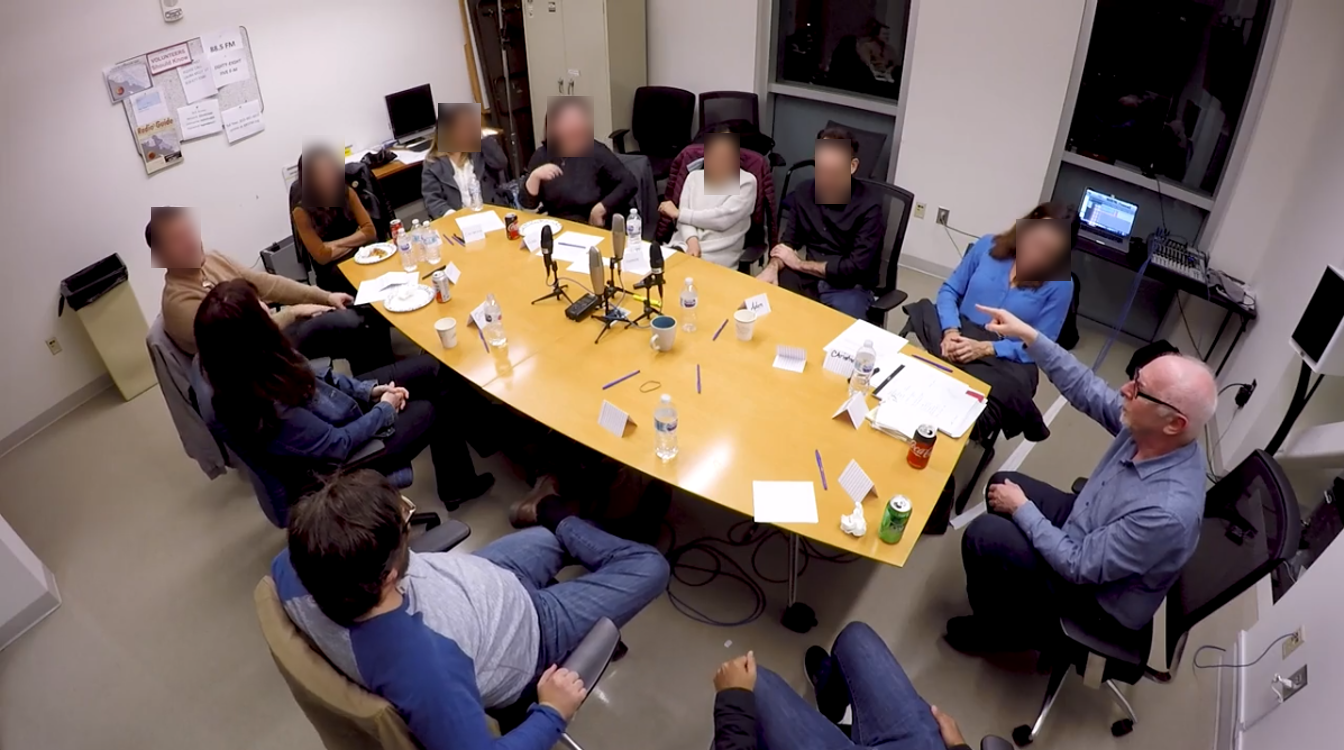
But the passion of the electorate – often expressed by various forms of anger and frustration – can only be achieved by actually talking to these engaged citizens moving the numbers. And, of course, listening to engaged people with opinions. That explains the strategy and success of Sarah Longwell (pictured), publisher of The Bulwark, and moderator of several focus groups she leads every week.
She also hosts a podcast, “The Focus Group,” that regularly shows how Longwell and her team tap into this treasure trove of qualitative data to better understand the voter mood, the vibe, the zeitgeist. Each episode contains sound bites from her respondents, adding credibility and reality to the conversation trying to make sense of the political landscape.
Longwell says she’s conducted north of 400 focus groups during what she refers to as the Trump era. And she’s probably right. Her perspective is being tapped a lot these days by some cable news outlets to explain the poll numbers everyone’s seeing. Longwell’s focus groups serve as “explainers” when the poll numbers begin to blur – the nuance behind the numbers.
As a focus group enthusiast, I share her point of view on the advantages of compelling quotes, facial expressions, and body language to make those quantitative numbers come alive. We did an estimate a few years ago that concluded I’ve moderated at least 1,000 since I started learning the ropes way back in the mid-1970’s.
Ironically, one area where Longwell and I may differ is in how she handles her bread and butter topic: politics. That’s because I’ve been moderator for news/talk focus groups when the topic of discussion veers into the political landscape. A loud, outspoken, and perhaps profane respondent without a filter can instantly alienate other group members to the point where some just shut down altogether. Think about a Thanksgiving dinner where relatives of diverse political persuasions sit down for a meal. Often brutal.
For situations like this, I prefer one-on-ones – 40 (or so) minutes with just the moderator and a single respondent. In nearly every case, this format – while more time-consuming – is productive, revealing, and more telling than trying to herd all the political “cats” in a conference (or Zoom) room with ten or twelve people.
I’ve got to hand it to Sarah Longwell, however, because she is elevating the sometimes lowly focus group to prime time status. For your stations (and/or your organization), they may be a lower-priced option than a full-throated perceptual study. Or they may be helpful before that big quantitative research survey to help you form questions you need to confirm with big numbers.
So, the question on the table with focus groups is a simple, but important one: Will they ever “scale?”
That is, can they ever provide sufficient confidence in their findings without having to conduct a big quant study? And the answer is maybe. If you do enough of them, among relatively consistent demographic groups, covering a reasonably well-defined topic, you’re likely to discern the common threads to lead to understanding.
Like the midterm election. I’ll be watching.

President & Founder at Jacobs Media
Jacobs Media has consistently walked the walk in the digital space, providing insights and guidance through its well-read national Techsurveys.
In 2008, jacapps was launched – a mobile apps company that has designed and built more than 1,300 apps for both the Apple and Android platforms. In 2013, the DASH Conference was created – a mashup of radio and automotive, designed to foster better understanding of the “connected car” and its impact.
Along with providing the creative and intellectual direction for the company, Fred consults many of Jacobs Media’s commercial and public radio clients, in addition to media brands looking to thrive in the rapidly changing tech environment.
Fred was inducted into the Radio Hall of Fame in 2018.
