

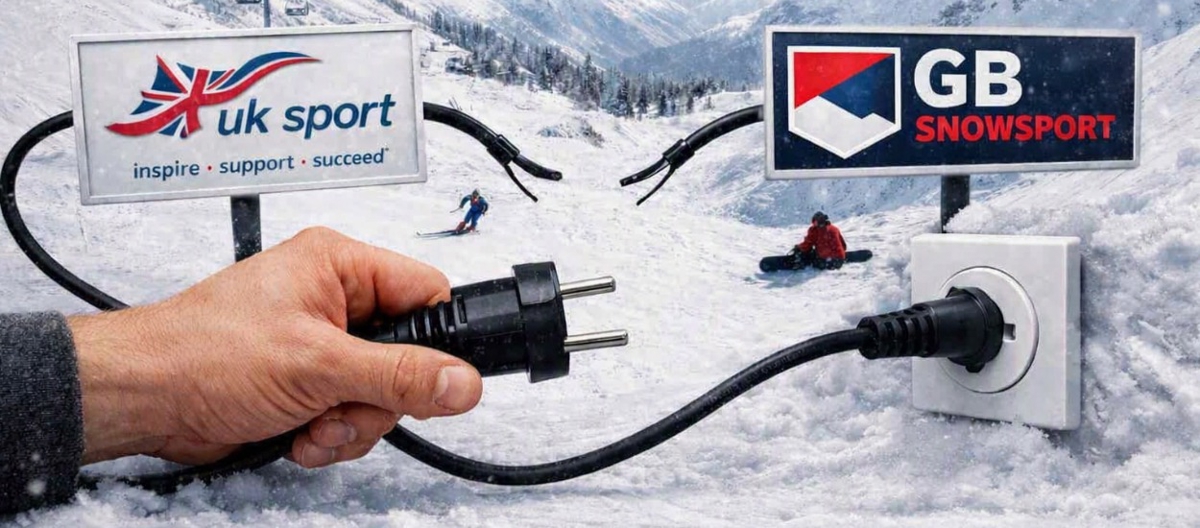
UK Sport has announced a record investment in winter sport athletes for the 2026–30 funding cycle while signalling a different funding route for the 2030 Olympic and Paralympic cycle. GB Snowsport has publicly expressed disappointment at UK Sport’s proposal, insisting it remains committed to supporting athletes and defending the governance and performance model that delivered Britain’s best-ever Olympic Winter Games on snow in Milan‑Cortina. The row raises wider questions about how elite funding decisions will affect snowsports and other Olympic and Paralympic disciplines ahead of the next major multi‑sport events.
UK Sport’s August 2026 announcement outlines a record investment in winter sport athletes intended to build on the success of the 2022–26 cycle and the Milan‑Cortina Winter Olympics. The funding package emphasises continued support for high‑performance programmes across winter disciplines and highlights the organisation’s strategic priorities for medal success and athlete development.
Beyond snowsports, the rest of the £33 million investment reinforces key ice and sliding disciplines as part of UK Sport’s system-wide modernization:
-
Bobsleigh & Skeleton (£10.01m): Funding will be managed by the British Bobsleigh and Skeleton Association (BBSA) for the 2030 quadrennial, before transitioning into Sport Org for the 2034 Utah Winter Games cycle.
-
Curling & Wheelchair Curling (£8.47m combined): Following back-to-back Olympic medal successes, British Curling’s programs will continue to be administered under the centralized Sport Org umbrella.
-
Ice Skating (£2.0m): Allocated to British Ice Skating to expand sports science, coaching, and athlete development pathways.
-
Ice Hockey (£445,000): A first-of-its-kind transitional grant aimed at helping the newly unified Ice Hockey UK governing body transition toward a commercially sustainable high-performance model.
The announcement also signals that UK Sport is proposing an alternative investment route for snowsport funding for the 2030 Olympic and Paralympic cycle, a move that shifts how money might be allocated and managed for the next quadrennial.
While snowsports secured the largest single slice of the financial pie with £12.5 million ringfenced for ski, snowboard, and para-snowsport athletes, the UK Sport Board confirmed it will not route that money through GB Snowsport for the upcoming cycle.
Instead, UK Sport intends to establish an alternative delivery framework—potentially routing the funds through “Sport Org,” a newly created multi-sport performance organisation designed to streamline administration and athlete support services across Olympic sports. UK Sport also announced a separate independent review into GB Snowsport’s governance.
To protect athletes during the transitional period, UK Sport confirmed that individual Athlete Performance Awards will continue to be paid directly without disruption.
GB Snowsport’s response was robust, saying “GB Snowsport is disappointed by UK Sport’s decision to propose an alternative investment route for snowsport funding for the 2030 Olympic and Paralympic cycle,” the governing body said in a statement. “We remain fully committed to supporting our athletes in their performance endeavours.
“We are hugely proud of everything that we have achieved over the past four years, not least the remarkable medal successes on the international stage culminating in Britain’s greatest ever Olympic Winter Games on snow in Milan-Cortina. Our athletes, staff, and sports have achieved incredible things on and off snow over recent years, and we firmly believe the system we have built together remains the most effective way to continue to support Britain’s snowsport athletes.
“We do remain committed to continuing to work with UK Sport on these matters in a constructive way. However, we reserve the right to keep all options open to ensure that the achievements of the past four years are not lost as we approach another European Games. We have recently concluded an independent governance review funded by UK Sport, which has confirmed that our governance standards remain strong and appropriate. We look forward to engaging fully and robustly in any new review, which we are confident will reach the same conclusions.”
The Daily telegraph is reporting that ” It is believed that GB Snowsport is now exploring its legal options in response to UK Sport’s actions.”
This is not the first time UK Sport and GB Snowsport have found themselves in a difficult funding conversation. In 2023, UK Sport upheld an appeal over Milan-Cortina investment, leaving earlier awards unchanged, while in the build-up to that cycle the organisation had already been criticised for cutting funding to some alpine and Nordic disciplines in favour of more targeted investment. Those disputes shaped the context for the current row, because they showed that UK Sport has repeatedly been willing to reallocate funding within snowsport in pursuit of sharper medal returns.
What is different now is the scale and symbolism. Britain has just achieved its best Winter Olympic performance on snow, and the sport is no longer fighting only for survival or relevance. It is fighting over the terms of its success. When a programme is producing medals, the argument shifts from whether it should be supported to who should own the architecture of that support. That is exactly where snowsport now finds itself.
Why this matters for snowsports
Snowsports are uniquely sensitive to funding and governance changes because:
-
High fixed costs (travel, snow access, equipment) make stable, predictable funding essential.
-
Small athlete pools in some disciplines mean that changes to investment routes can disproportionately affect talent pathways and coaching continuity.
-
Momentum from recent success (medals, higher profile) can be fragile; abrupt funding changes risk disrupting athlete preparation and retention.
GB Snowsport’s insistence that the current system is the best vehicle for continued success frames the dispute as more than a bureaucratic reshuffle — it’s a debate over how to preserve and scale a high‑performance model that has recently delivered results.
Wider implications for other sports
-
Although snowsports are at the centre of this story, the dispute has echoes across the wider high‑performance landscape:
-
Other winter and summer sports will watch closely for precedent: alternative investment routes could be proposed for other disciplines in future cycles.
-
National governing bodies (NGBs) may face increased scrutiny and potential restructuring if UK Sport pursues different delivery models.
-
Athletes across sports could experience uncertainty during any transition, affecting preparation for European Games, World Championships, and Olympic/Paralympic qualification.
-
Public and sponsor confidence can be affected by high‑profile disagreements between funders and NGBs, with potential knock‑on effects for fundraising and grassroots engagement.
What happens next
-
GB Snowsport has said it will engage fully and robustly in any new review and continues to work with UK Sport constructively, while keeping options open.
-
UK Sport’s proposed alternative route will likely be subject to consultation, review and possibly further independent scrutiny before any final funding decisions for the 2030 cycle are confirmed.
-
Stakeholders — athletes, coaches, sponsors and other NGBs — will be watching for clarity on timelines, governance arrangements and transitional support to avoid disruption to athlete programmes.
Bottom line
The dispute is a high‑stakes negotiation over how Britain’s winter sport success is sustained. UK Sport’s record investment signals continued ambition for winter medals, but its proposal to change the investment route for 2030 has prompted a defensive response from GB Snowsport, which argues the current partnership model is the best way to protect recent gains. The outcome will shape not only snowsports but could influence funding models across the UK high‑performance system as the country prepares for the next major multi‑sport events.
